Home › Plumber Lancaster PA › Water Softener
Water Softener Installation and Service in Lancaster, PA
A water softener is a treatment unit fitted where water enters the home that removes the calcium and magnesium minerals which make water hard, so the water reaching your fixtures, appliances and water heater no longer deposits scale. Call (607) 305-8020 and we connect you with an independent local plumber in Lancaster, PA. Plumbing Lancaster PA is a connection service, not a plumbing company.
At a glance
What is a water softener, and how does it work?
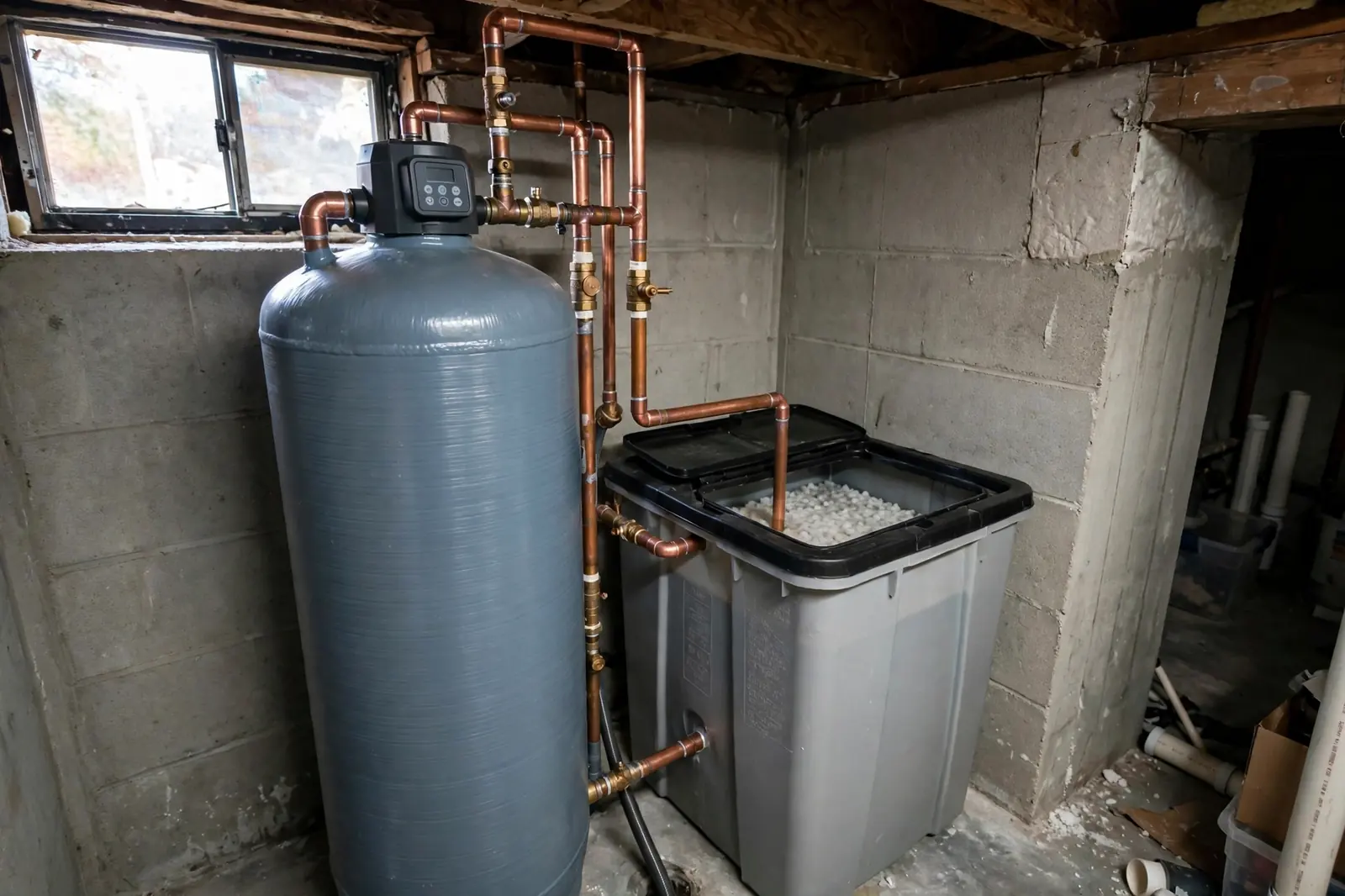
A water softener works by ion exchange: as hard water passes through a tank of resin beads, the beads trade the calcium and magnesium in the water for sodium, and the softened water flows on to the house. Hardness is not dirt or contamination. It is dissolved mineral picked up as water moves through rock and soil, and it stays invisible until heat or evaporation brings it out as scale.
When the resin beads have given up their sodium, the system regenerates: a brine solution drawn from the salt tank flushes the beads, strips off the collected minerals and recharges them, and the waste goes to a drain. That cycle is why a softener needs a salt tank, a drain connection and a power supply for its control valve. Fitted at the point where water enters the home, one unit treats every tap, shower and appliance downstream of it. For a full picture of what one call covers beyond treatment, see plumber services in Lancaster, PA.
What does hard water do to a Lancaster County home?
Lancaster County water is known to be hard, and the evidence shows up as white scale on fixtures, spots on glassware, stiff laundry and shortened appliance life. You do not need a test strip to read the signs, because hard water writes them on the house itself. Kettles fur up. Shower heads clog a hole at a time until the spray goes uneven. Taps and shower glass carry a chalky film that cleaning removes for a day and no longer.
The expensive damage is the hidden kind. Scale builds inside water heaters as an insulating layer on heating surfaces, so the heater works harder and wears faster, and it narrows pipes and valve passages slowly over years. Washing machines and dishwashers suffer the same buildup. If your heater is already showing strain, pair this page with water heater repair in Lancaster, because scale damage and heater faults often arrive together and the same conversation covers both.
How is a water softener sized for your household?
A softener is sized by matching its grain capacity to your household's daily water use and the hardness of your water, so it regenerates as often as it should and no more. An undersized unit regenerates constantly, wasting salt and water and still letting hard water through at peak times. An oversized unit costs more up front and can sit too long between regenerations, which is not ideal for the resin either.
The sizing conversation covers how many people live in the home, how many bathrooms there are, and whether use is spread through the day or concentrated in morning and evening peaks. The plumber will also ask about the water source, since a home on a well may need the water tested and may have other treatment questions ahead of softening. Bring a recent sense of your water use if you have one, and mention any plans that change the household, such as a bathroom addition, because the right size today should still be the right size after the change.
What is the difference between salt based softeners and non-salt conditioners?
A salt based softener removes hardness minerals from the water; a non-salt conditioner changes how the minerals behave so they deposit less scale, but the minerals stay in the water. These are different products solving overlapping problems, and the honest choice depends on what you want treated. If the goal is genuinely soft water, meaning no scale on fixtures, better soap performance and protection inside the water heater, ion exchange softening is the method that delivers it.
Conditioners can reduce how stubbornly scale sticks to surfaces, and they need no salt, no drain and no regeneration water. But because the hardness remains, the feel of the water, the spotting and the internal protection are not the same. The plumber should explain this distinction plainly rather than letting the word softener cover both. Ask directly: does this unit remove the minerals, or condition them? The answer tells you which product you are actually buying.
What salt and maintenance does a softener need?
A salt based softener needs its brine tank kept topped up with softener salt, an occasional check that no salt bridge has formed, and periodic servicing of the control valve and resin. Day to day, the system runs itself: the control valve meters water use or follows a schedule and regenerates when the resin is spent. Your job is mostly the salt. Letting the tank run empty means the house quietly goes back to hard water, often noticed first as the return of scale on the shower.
Resin lasts a long time but not forever, and a service visit can test whether the system is still softening properly rather than just cycling.
Where is a softener installed, and what does fitting involve?
A softener is installed on the main water line where it enters the home, ideally near a drain and a power outlet, with a bypass valve so the unit can be isolated for service. Basements and utility areas are the usual locations in Lancaster homes, close to the water heater it is protecting. The fitting work cuts the unit into the main line, connects the drain for regeneration waste, fills and programs the system, and tests the water at a tap to confirm the softening is working.
Placement decisions matter. Outdoor taps are often left on hard water deliberately, since softened water is wasted on a lawn and the sodium is not wanted on plants. Homes on septic systems should raise that at the planning stage, because regeneration discharge becomes part of the conversation. If your main line and valves are old, the plumber may suggest renewing the shutoff or sections of tired pipe while access is open, and any such addition is agreed with you separately. Read how it works to see how the connection runs from call to visit.
What affects the cost of a water softener?
Softener cost depends on the capacity the household needs, the type of system, the condition of the main line where it will be fitted, and whether drain and power are already within reach. A small home on a short, accessible main line with a floor drain nearby is a simpler job than a large household needing a high capacity unit plumbed into a finished utility room. No responsible figure exists before those facts are known.
Capacity
grain rating sized to household size, bathrooms and water hardness
System type
metered regeneration versus timer based, and single tank versus higher demand setups
Installation conditions
distance to drain and power, and the state of the existing main valve
Water source
well water may need testing and pre-treatment ahead of the softener
Ongoing costs
salt, regeneration water and periodic servicing over the system's life
You agree the full scope and price directly with the independent plumber before any equipment is ordered.
How does Plumbing Lancaster PA work?
Plumbing Lancaster PA works in 3 steps: call, describe, connect. We are a connection service, not a plumbing company, so the plumber who arrives is a local independent tradesperson, not our employee.
Call one number
Dial (607) 305-8020 any time. The line covers Lancaster city and the whole county service area.
Tell us the problem
Say what is leaking, clogged or cold, and which town you are in. Urgent jobs get flagged urgent.
Get connected locally
We connect you with a local plumber who takes the job. You agree scope and price with the plumber directly.
Need this done in Lancaster, PA?
Call (607) 305-8020 and tell us the problem and your town. We connect you with an independent local plumber who takes the job, and you agree the scope and price with the plumber before any work starts.
Call (607) 305-8020Water softener questions, answered
How do I know if my home needs a water softener?
Read the evidence in the house: scale returning on taps and shower glass, spots on dishes, a kettle that furs up, and a water heater working harder than it should. Lancaster County water is known to be hard, so if those signs are present, a softener addresses the cause rather than the symptoms. The plumber can test your water at the visit to confirm.
Will a softener make my water taste salty?
Properly softened water should not taste salty. The sodium added by ion exchange is small, and the salt in the tank is used to regenerate the resin, then rinsed away, rather than poured into your drinking water. If softened water ever tastes noticeably salty, that signals a system fault or wrong settings, which a service visit can correct.
Can I drink softened water?
Most households drink softened water without a second thought, but some prefer a hard water tap at the kitchen sink for drinking and cooking, which can be arranged when the system is fitted. If anyone in the home manages their sodium intake carefully, raise it with the plumber during planning so the layout reflects it.
How often will the softener regenerate?
It depends on capacity, water use and hardness. A correctly sized metered system regenerates when the resin is actually spent, which for a typical household works out to a regular cycle measured in days, not hours. Regenerating far more often than that usually means the unit is undersized or the settings need adjusting.
Does a softener help my water heater?
Yes, in a specific way: soft water stops new scale forming on heating surfaces, so the heater holds its efficiency and avoids the strain that scale causes. It does not undo scale already built up, which is why heater condition and softening often come up in the same conversation. Ask the plumber to assess both if your heater is older.
What happens if I stop adding salt?
The resin cannot regenerate without brine, so the system gradually stops softening while still letting water through. Nothing breaks, but the house returns to hard water and scale starts forming again. If you are going away for an extended period, ask the plumber about bypassing the unit so it sits idle correctly.
Hard water marking your fixtures and straining your heater?
Call (607) 305-8020 to discuss softener sizing for your Lancaster home. We connect you with an independent local plumber, and you agree the scope and price directly.