Home › Plumber Lancaster PA › Water Heater Installation
Water Heater Installation in Lancaster, PA
Water heater installation in Lancaster, PA is the fitting of a new tank or tankless water heater, including its water, fuel, venting and drainage connections, followed by testing so hot water is delivered safely throughout the home. Tell us whether you want electric or natural gas, tank or tankless, and where the unit will sit. We connect you with an independent local plumber who confirms sizing and scope with you, and agrees the price with you directly before installation begins.
At a glance
What is water heater installation, and when is it the right service?
Water heater installation is the fitting of a new water heater where a home needs one, including setting the unit, connecting water, fuel and venting, filling and testing it, and checking that hot water reaches the fixtures safely. It covers first time installs, added units and planned upgrades, not just breakdowns.
Installation is the right service when you are building, converting a space, adding a bathroom, upsizing for a growing household, or switching types, for example from a tank to a tankless unit. If an old unit has failed and is being swapped out, the job is usually described as water heater replacement, and the removal of the old heater becomes part of the work.
Plumbing Lancaster PA is a connection service, not a plumbing company. We connect you with an independent local plumber who will confirm the site, the fuel supply and the venting route before the install is booked, and you agree the scope and price with that plumber directly. See how the connection service works if you want the steps before you call.
What should you decide before a new water heater is installed?
Before installation, decide the fuel type, tank or tankless design, size in gallons or flow rate, and the exact location, because those four choices determine the plumbing, venting, electrical or gas work and the total scope of the job. Changing any of them after the unit arrives can delay the install.
A site check matters most when you are changing type or location. A tankless conversion, for example, can need a larger gas line, new venting and a condensate drain that a simple tank swap does not.
Should you choose a tank, tankless, electric or natural gas heater?
Choose a tank heater for a straightforward install and lower complexity, a tankless heater for hot water on demand and a smaller footprint, electric where gas is not available, and natural gas where a suitable gas supply and venting route already exist. There is no single best type, only the type that fits the house and its use.
Tank heaters
A tank stores heated water, commonly sized in gallons, and is simple to install where a like unit already sits. It uses energy to keep stored water hot, and its life in Lancaster is closely tied to sediment and anode rod condition.
Tankless heaters
A tankless unit heats water as it passes through, so it does not run out in the same way, but it must be sized for peak demand when showers, laundry and a dishwasher overlap. Scale control is essential in hard water areas.
Electric compared with natural gas
Electric units avoid combustion and venting but need the right circuit and breaker capacity. Gas units heat quickly but need correct gas supply, venting and combustion air. If your old unit has failed rather than being upgraded, compare this with water heater repair in Lancaster, PA before committing to a new install.
What happens during a water heater installation?
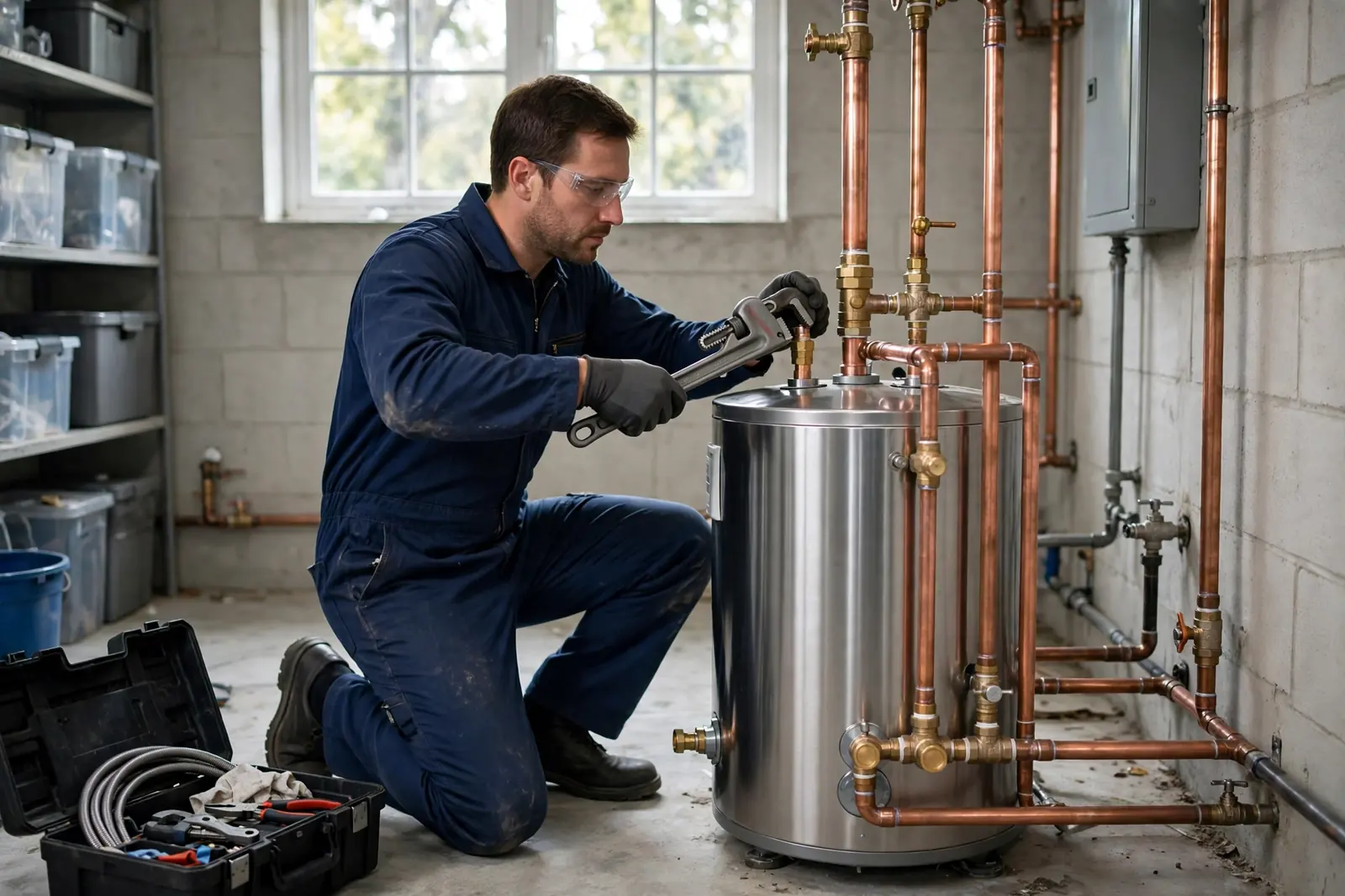
During installation the plumber shuts off water and fuel, drains any existing unit in the way, sets the new heater level and secure, connects water, fuel, venting and drainage, then fills, purges air, starts the unit and tests hot water and safety controls. The final checks are as important as the connections.
On a tank install, that includes the temperature and pressure relief valve, its discharge pipe, the expansion tank where required, and shutoff valves you can actually reach later. On a gas install, it includes leak testing the gas joints and confirming the vent rises and terminates correctly. On a tankless install, it includes service valves for future descaling, a condensate drain where the unit produces one, and setting the output temperature.
Basement installs are common in Lancaster homes, and they help because floor drainage and access are usually better than in a closet or attic. Wherever the unit goes, ask where the shutoffs are and how to drain it before the plumber leaves. That short walkthrough makes later maintenance and emergencies much easier.
What size water heater does a Lancaster home need?
The right size depends on how much hot water your household uses at its busiest time, counted by bathrooms, occupants and appliances for tank units in gallons, and by simultaneous flow for tankless units. Sizing by bedrooms alone often misses the real peak demand.
Think about a weekday morning. Two showers running, a sink in use and laundry starting can overlap. A tank must hold enough hot water for that window and recover fast enough afterwards. A tankless unit must deliver that combined flow at the temperature rise needed, which in a Pennsylvania winter means heating colder incoming water further than in summer.
Undersizing shows up as showers that turn cold and complaints at peak times. Oversizing a tank means paying to heat and store water you rarely use, and taking up more space. Tell the connected plumber how many people live in the home, how many bathrooms there are, and whether a large tub, body sprays or frequent laundry loads are part of normal use. That conversation, not a guess from the old unit label alone, gives the right size.
What affects the cost of water heater installation?
Installation cost is affected by the type and size of the unit, the fuel type, venting changes, access to the install location, and any permits, electrical, gas or drainage work needed to install it correctly. We do not list install prices here, because two homes rarely need the same scope.
Unit type and size
larger tanks in gallons and higher capacity tankless units are different jobs from standard sizes.
Fuel type
electric work may involve circuits and breakers, while natural gas work may involve gas piping and venting.
Venting
reusing a sound vent is simpler than running a new vent route through a wall or roof.
Access
basement installs with clear access differ from tight closets, attics or narrow stairways.
Permits and inspections
local permit requirements can apply to new installs and to type or location changes.
Water treatment
adding protection against Lancaster hard water scale can be included in the same scope.
You agree the full scope and price with the independent plumber before installation starts. Ask for the scope in writing, including what happens to packaging, condensate and any old unit that is being removed.
How does Lancaster hard water change an installation plan?
In Lancaster County, hard water should shape the install from day one, with flushing access, service valves and a maintenance plan included, because scale is the main reason local heaters lose efficiency and fail early. Planning for scale is far cheaper at install than after the unit is coated inside.
For a tank, that means a drain valve you can use, clearance to flush sediment, and an anode rod that can actually be removed later, which needs headroom above the unit. For a tankless heater, it means isolation and service valves fitted as standard, so the heat exchanger can be descaled without cutting pipework.
Many Lancaster homes also deal with finished basements, where a heater leak can damage flooring and stored belongings. A drain pan with a drain route, where the layout allows it, is worth discussing at install. If scale is already marking fixtures across the house, ask about water softener installation in Lancaster, PA alongside the heater, so the new unit starts with treated water rather than repeating the old unit history.
How does Plumbing Lancaster PA work?
Plumbing Lancaster PA works in 3 steps: call, describe, connect. We are a connection service, not a plumbing company, so the plumber who arrives is a local independent tradesperson, not our employee.
Call one number
Dial (607) 305-8020 any time. The line covers Lancaster city and the whole county service area.
Tell us the problem
Say what is leaking, clogged or cold, and which town you are in. Urgent jobs get flagged urgent.
Get connected locally
We connect you with a local plumber who takes the job. You agree scope and price with the plumber directly.
Need this done in Lancaster, PA?
Call (607) 305-8020 and tell us the problem and your town. We connect you with an independent local plumber who takes the job, and you agree the scope and price with the plumber before any work starts.
Call (607) 305-8020Water heater installation questions, answered
How long does water heater installation take?
A like for like tank install in an accessible basement is usually a shorter job than a tankless conversion, a relocation or a fuel change, which can need new venting, gas or electrical work and drainage. The connected plumber can give a realistic timeframe once the site and scope are confirmed.
Can I switch from a tank to a tankless water heater?
Often, yes, but it is a conversion, not a simple swap. It can require a larger gas line on gas models, new venting, a condensate drain and correct sizing for peak flow. An electric tankless conversion can require major electrical capacity. A site check comes first.
Do I need a permit to install a water heater in Lancaster?
Permit and inspection requirements can apply and vary by municipality and by the scope of work, especially for new locations, fuel changes and venting changes. The independent plumber who takes the job can advise on the local requirements for your address and include any permit steps in the scope.
What size water heater do I need?
Size a tank in gallons around peak household demand, bathrooms and occupants, and size a tankless unit by the flow needed when fixtures overlap, allowing for cold winter incoming water. Tell the plumber about large tubs, multiple showers and laundry habits so the size is based on real use.
Is installation different from replacement?
Installation is fitting a new unit, including for upgrades, conversions and new locations. Replacement is swapping out an old unit, which adds draining, removal and disposal of the old heater. If your existing unit has failed, the replacement page explains that process in detail.
How does Plumbing Lancaster PA work for installation?
We are a connection service, not a plumbing company. Call (607) 305-8020, tell us the fuel type, location and type you are considering, and we connect you with an independent local plumber. You agree the scope and price directly with that plumber before work starts.
Planning a new water heater in Lancaster?
Call (607) 305-8020 with the type, fuel and location you have in mind, and we will connect you with an independent local plumber for installation.