Home › Plumber Lancaster PA › Bathroom Plumbing
Bathroom Plumbing in Lancaster, PA
Bathroom plumbing covers the supply lines, drains, valves and fixtures that serve toilets, tubs, showers and sinks, from single fixture repairs to the rough-in pipework for a full remodel. Call (607) 305-8020 and we connect you with an independent local plumber in Lancaster, PA. Plumbing Lancaster PA is a connection service, not a plumbing company.
At a glance
What does bathroom plumbing cover?
Bathroom plumbing covers every pipe, valve and fixture that brings water into the bathroom and carries it away. On the supply side that means the hot and cold lines, the shutoff valves at each fixture and the valves inside showers and tubs. On the drain side it means traps, waste lines and venting, which is what lets drains run quietly without gurgling or smells.
The work ranges from a twenty minute washer change to moving every fixture in the room during a remodel. Most calls sit in the middle: a toilet that will not stop running, a shower valve that drips or runs lukewarm, a faucet leaking into the cabinet below. Because bathrooms stack plumbing densely, one visit can often deal with two or three small faults at once, so mention everything that is misbehaving when you call. For the wider picture of what one call covers, see plumber services in Lancaster, PA.
Why does a toilet keep running, leaking or failing to flush?
A running toilet is almost always a worn flapper, a faulty fill valve or a flush mechanism that no longer seals, and all three are repairable without replacing the toilet. A toilet that runs on and off by itself is usually passing water slowly from the tank into the bowl, which wastes a surprising amount of water and can mark the bowl with a constant trickle stain. A weak or double flush points to the flush mechanism or to water level settings inside the tank.
Water on the floor is a different problem. A leak at the base suggests the seal between toilet and floor flange has failed, and that one should not wait, because water reaching the subfloor damages it quietly. Rocking toilets, rusted bolts and supply line leaks at the wall valve each have their own fix. Replacement makes sense when the porcelain is cracked, the toilet is old enough that parts are hard to source, or you want a more efficient flush as part of a wider update.
What causes tub and shower problems, and how are they fixed?
Most tub and shower faults come from the valve and cartridge behind the handle, worn seals, or a drain that is narrowing with hair and soap buildup. A shower that drips after shutoff, swings between hot and cold, or delivers weak pressure from the head while the tub spout runs fine is usually telling you the cartridge or diverter needs attention, not the whole installation.
Slow tub drainage is normally a partial blockage close to the drain, and persistent standing water deserves a look before it becomes a full stoppage. Leaks are the serious category: water appearing on the ceiling below a bathroom, soft flooring beside a tub, or damp at the base of a shower tray all suggest water escaping behind the finishes, where it does the most harm unseen. If a stain is growing and the source is unclear, the plumber may recommend leak detection in Lancaster, PA first, so the right panel is opened and not the wrong one.
When should a bathroom faucet be repaired, and when replaced?
A faucet that drips from the spout or leaks around the handle can usually be repaired with new cartridges, seals or washers; a faucet with a corroded body or obsolete parts is better replaced. The plumber will identify the faucet type first, because a modern cartridge faucet, an older compression faucet and a ceramic disc faucet each fail differently and take different parts.
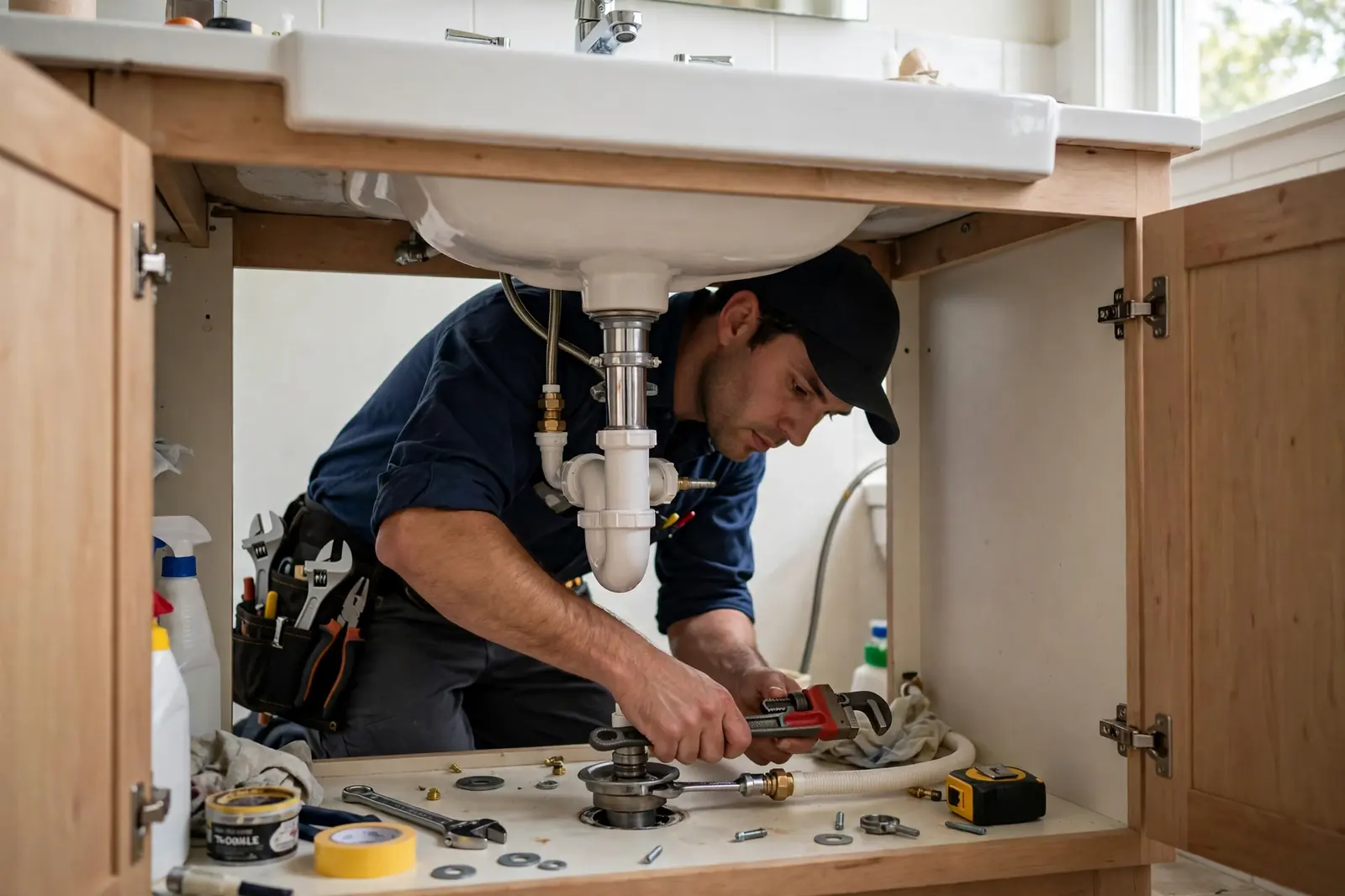
Leaks under the sink deserve the same visit. Supply connections, trap joints and pop-up drain assemblies all live in that cabinet, and a slow drip there can swell the cabinet floor and damage the wall behind long before it is noticed. Replacement is the practical route when the finish is failing, the handles are stiff throughout, or the style is changing as part of a refresh. Fitting a new faucet also gives the plumber the chance to renew the shutoff valves and supply lines at the same time, which removes the oldest weak points in the room.
What does the plumbing rough-in for a bathroom remodel involve?
Rough-in is the hidden pipework stage of a remodel: supply lines, drains and vents are positioned for the new layout and tested before walls and floors are closed. It happens after the room is stripped out and before tiling or fitting begins. If a toilet, tub or shower is moving to a new position, the drain routes and venting have to move too, and drain position is governed by slope and vent rules rather than by where a fixture would look best.
This is the stage where old pipe is easiest to deal with. With the room open, worn supply runs and tired valves can be renewed without extra opening later, and older homes in Lancaster often reveal galvanized sections worth replacing while access is easy. If the remodel exposes system wide wear, the plumber may raise repiping in Lancaster, PA as a coordinated option. Once the rough-in is tested and signed off between you and the plumber, the finishing trades can close the room with confidence.
Which bathroom problems should you not leave for later?
Leave the drips if you must, but never leave water escaping where you cannot see it, a toilet leaking at its base, or sewage smells coming from a drain. Bathroom faults divide into two groups. Annoyances, like a slow filling toilet or a faucet that drips into the basin, waste water and money but do limited harm while you arrange a visit. Damage faults are the ones quietly wetting floors, walls and ceilings, and every week they run, the repair grows beyond plumbing into plaster, timber and tile.
For a drain that is slow rather than blocked at the fixture, the connected plumber may pair the visit with a drain cleaning visit in Lancaster, PA.
What affects the cost of bathroom plumbing work?
Bathroom plumbing cost depends on the fixture, the fault, the parts involved and how much access the room allows. A cartridge swap in an accessible shower valve and a valve replacement behind a tiled wall are both shower repairs, but they are very different jobs. That is why a responsible plumber prices the work after seeing the room, not from a description alone.
Fixture and fault
a flapper change versus a full toilet replacement
Access
whether valves and connections are reachable, or finishes must be opened
Parts
standard cartridges and seals versus parts for older or imported fixtures
Pipe condition
whether the surrounding pipework is sound or also needs renewal
Scope
one fixture, or several faults handled in a single visit
You agree the scope and price directly with the independent plumber before work starts. One visit covering two or three small faults is usually better value than three separate callouts.
How does Plumbing Lancaster PA work?
Plumbing Lancaster PA works in 3 steps: call, describe, connect. We are a connection service, not a plumbing company, so the plumber who arrives is a local independent tradesperson, not our employee.
Call one number
Dial (607) 305-8020 any time. The line covers Lancaster city and the whole county service area.
Tell us the problem
Say what is leaking, clogged or cold, and which town you are in. Urgent jobs get flagged urgent.
Get connected locally
We connect you with a local plumber who takes the job. You agree scope and price with the plumber directly.
Need this done in Lancaster, PA?
Call (607) 305-8020 and tell us the problem and your town. We connect you with an independent local plumber who takes the job, and you agree the scope and price with the plumber before any work starts.
Call (607) 305-8020Bathroom plumbing questions, answered
Can a plumber fix a running toilet in one visit?
Usually, yes. Running toilets are normally a flapper, fill valve or flush mechanism fault, and plumbers carry the common parts for standard toilets. If your toilet is an unusual or older model, the plumber will identify the parts needed at the visit and agree the return trip with you. Either way, the water waste stops being a guess.
Why is my shower hot, then cold, then hot again?
Fluctuating shower temperature usually points to the valve cartridge, which mixes hot and cold and wears over time. It can also appear when another fixture draws water and the valve cannot compensate. A plumber can test the valve at the visit and tell you whether a cartridge change solves it or the valve itself needs replacing.
Should I repair my old bathroom faucet or replace it?
Repair it if the body and finish are sound, because cartridges and seals are inexpensive parts. Replace it if the body is corroded, the finish is failing, parts are no longer available, or you are refreshing the room anyway. The plumber will show you the condition of the faucet and let you decide with the facts in front of you.
Do I need a plumber for a bathroom remodel, or just for repairs?
Any remodel that moves a fixture, changes a drain or opens a wall with pipe in it needs a plumber for the rough-in stage. Even a like for like remodel benefits from a visit while the room is open, because valves, traps and supply lines can be renewed at the only moment they are cheap to reach.
Why does my bathroom drain smell?
The usual cause is a trap that has dried out or a buildup in the drain, both of which let sewer gas back into the room. A shower used rarely is the classic case. Running water regularly can restore the trap seal; if the smell persists, the plumber will check the trap, the drain and the venting for the real cause.
What should I tell the plumber when I call?
Describe each fault separately, even the small ones: which fixture, what it does, and how long it has been doing it. Mention any water on floors or stains on ceilings below, and the age of the home if you know it. Call (607) 305-8020 and we connect you with a local plumber who takes bathroom work.
A bathroom fault that needs a plumber in Lancaster?
Call (607) 305-8020 and list what is misbehaving. We connect you with an independent local plumber, and you agree the scope and price with the plumber directly.