Home › Plumber Lancaster PA › Repiping
Repiping in Lancaster, PA
Repiping is the replacement of a home's aging water supply pipes with new pipe, done either throughout the whole home or in the sections that have started to fail. Call (607) 305-8020 and we connect you with an independent local plumber in Lancaster, PA who can assess your pipes and talk through the options. Plumbing Lancaster PA is a connection service, not a plumbing company.
At a glance
What is repiping, and how is it different from a repair?
Repiping replaces the pipe system itself, while a repair fixes one failed spot in a system that is otherwise sound. Every supply pipe has a working life. Galvanized steel corrodes from the inside, joints weaken, and the inside diameter of the pipe narrows year by year. A repair makes sense when one joint or one short section fails in pipe that is otherwise healthy.
Repiping makes sense when the failures are a pattern rather than an accident: repeat leaks in different rooms, pressure that keeps falling, or water that runs discolored after sitting. At that point, each repair buys less time than the last, and the money spent patching goes toward a system that is still aging. The plumber's job on an assessment visit is to tell you honestly which side of that line your home sits on. If the problem is one hidden leak rather than system wide wear, leak detection in Lancaster, PA is the right first step instead.
What are the signs your pipes need replacing?
The clearest signs are falling water pressure, rusty or discolored water, and leaks that keep appearing in new places. Old pipe rarely fails all at once. It narrows, pits and weakens over years, and the symptoms build slowly enough that many homeowners adjust to them without noticing.
Any one of these can have a simpler cause, which is why an assessment comes before a decision. Several together, in a home with pipe of a certain age, usually point the same way.
Why does galvanized pipe fail in older Lancaster rowhomes?
Galvanized pipe fails because its protective zinc coating wears away and the steel underneath corrodes from the inside out. Many Lancaster rowhomes and older houses across the county were plumbed with galvanized steel, and a large share of that pipe is now well past the age it was expected to serve. The corrosion is invisible from outside for most of its life: the pipe can look solid in the basement while the bore inside has narrowed to a fraction of its original size.
Rowhome layouts add their own complications. Supply runs pass through shared walls and tight chases, upstairs bathrooms sit at the end of long runs, and access panels were rarely part of the original build. That is why pressure problems in a rowhome often show first at the top floor shower, and why a repiping plan for these homes has to be drawn around the actual pipe routes rather than assumed ones.
Should you choose PEX or copper for a repipe?
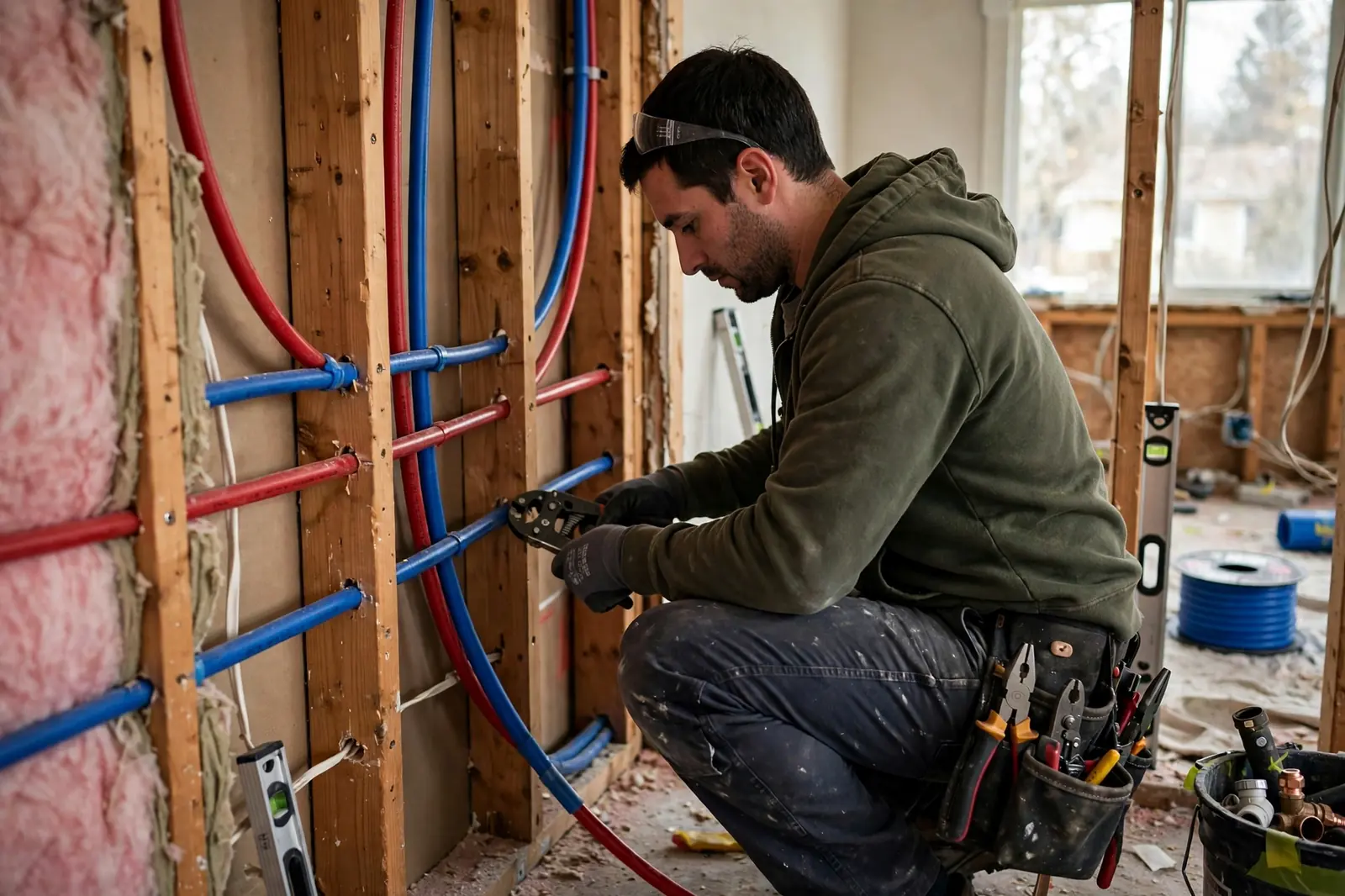
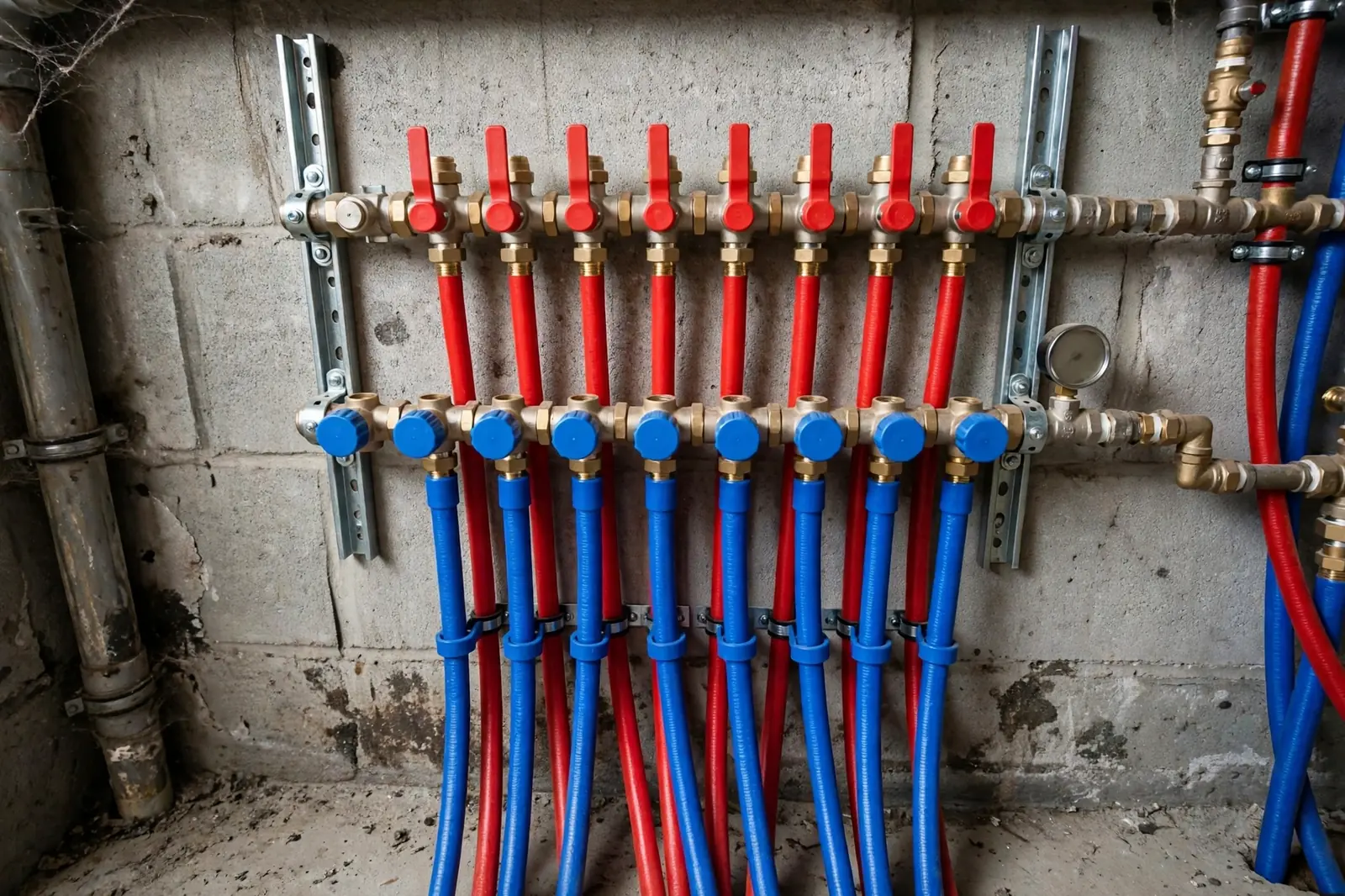
PEX and copper are both sound choices for a repipe; the right one depends on your home's layout, your water and how the runs need to be routed. PEX is a flexible plastic pipe that can bend around corners and run in long continuous lengths, which means fewer joints hidden inside walls. Fewer joints means fewer potential leak points, and the flexibility suits the tight chases and plaster walls of older Lancaster homes.
PEX
Copper
Copper is a rigid metal pipe with a long track record. It is joined with soldered or pressed fittings, holds its shape on exposed runs, and many homeowners and plumbers prefer it where pipe will be visible, such as basement runs. It takes more fittings and more access than PEX on complicated routes. The connected plumber will explain how each material behaves in your specific home, and what the choice means for the scope of the job, before you decide.
Do you need a whole home repipe or a partial one?
A partial repipe replaces the worst sections of pipe, while a whole home repipe renews every supply line at once; the condition of the whole system decides which is honest value.
Partial repipe
Partial repiping suits a home where one area has failed early: a run damaged by a past leak, or a section of pipe that was installed badly. It costs less now and fixes the immediate problem. The risk with a partial repipe is that the remaining old pipe keeps aging, and new pipe joined to old can even shift pressure stress onto the weakest remaining section.
Whole home repipe
A whole home repipe ends that cycle in one project: every supply line is new, pressure is consistent, and the question does not come back room by room.
The plumber should show you the condition of the pipe they can see, including any sections cut out, so the whole versus partial decision rests on evidence rather than preference.
What happens during a repiping job?
A repiping job runs in stages: plan the new routes, run the new pipe, connect fixture by fixture, test under pressure, then close up. Most of the new pipe is run before the old system is taken out of service, which keeps the time without water as short as the layout allows. The water is shut off for the changeover periods, and the plumber will tell you in advance which parts of the day those will be.
Access openings are made where the new runs and connections need them, typically in the least visible places the route allows. Once the new system is connected, it is pressure tested and every fixture is run to check flow and flush the lines. Old pipe is removed where it is accessible and capped safely where it is not. If your project is part of a bathroom update, the rough-in work can be coordinated with bathroom plumbing in Lancaster, PA so walls are opened once, not twice.
What affects the cost and timeline of repiping?
Repiping cost and timing depend on the size of the home, the number of fixtures, the pipe material chosen and how much access the walls and floors allow. There is no responsible flat figure for a repipe, because two homes on the same Lancaster street can have completely different pipe routes. Anyone quoting a firm total without walking the home is guessing with your money.
Home size and storeys
more fixtures and longer runs mean more pipe and more connections
Material
PEX and copper differ in material cost and in how much access each joint needs
Access
open basements and crawl spaces speed the work; finished plaster walls slow it
Scope
whole home versus partial, and whether drain lines are included or only supply lines
Finish work
patching and making good the access openings afterward
You agree the full scope and price directly with the independent plumber before work starts. To understand the connection process itself, see the connection process, step by step.
How does Plumbing Lancaster PA work?
Plumbing Lancaster PA works in 3 steps: call, describe, connect. We are a connection service, not a plumbing company, so the plumber who arrives is a local independent tradesperson, not our employee.
Call one number
Dial (607) 305-8020 any time. The line covers Lancaster city and the whole county service area.
Tell us the problem
Say what is leaking, clogged or cold, and which town you are in. Urgent jobs get flagged urgent.
Get connected locally
We connect you with a local plumber who takes the job. You agree scope and price with the plumber directly.
Need this done in Lancaster, PA?
Call (607) 305-8020 and tell us the problem and your town. We connect you with an independent local plumber who takes the job, and you agree the scope and price with the plumber before any work starts.
Call (607) 305-8020Repiping questions, answered
How long does a whole home repipe take?
Most homes take a few days rather than weeks, but the honest answer depends on size, storeys and access. A compact rowhome with an open basement moves faster than a large home with finished walls throughout. The plumber will give you a day by day picture, including when the water will be off, before you agree to the job.
Can I stay in the house during repiping?
In most cases, yes. Water is shut off during changeover periods rather than for the whole project, and the plumber sequences the work so a working bathroom is available as early as possible. Ask about the daily schedule when you agree the scope, especially if anyone at home depends on water during the day.
Will repiping fix my low water pressure?
If the low pressure comes from corroded, narrowed pipe, yes, new pipe restores the full bore and pressure usually improves noticeably, especially upstairs. If the cause sits elsewhere, such as a failing pressure regulator or a problem on the supply from the street, the assessment visit should find that before you commit to a repipe.
What happens to the old galvanized pipe?
Accessible old pipe is removed. Sections sealed inside walls that are not being opened are drained, cut and capped so they can never carry water again. The plumber will explain which approach applies to each run in your home, so nothing live is left hidden in a wall.
Does repiping mean replacing the drains too?
Not automatically. Repiping usually refers to the supply lines that bring water in. Drain and waste lines are a separate system with a different lifespan and different failure signs. If the plumber sees drain problems during the assessment, they will raise them separately rather than folding them silently into the quote.
How do I know a partial repipe is not a false economy?
Ask the plumber to show you the condition of the pipe that would stay. If the remaining runs are sound, a partial repipe is a reasonable, honest job. If the remaining pipe is the same age and shows the same corrosion as the sections being replaced, the plumber should say so plainly and let you weigh the whole home option.
Aging pipes and falling pressure in Lancaster?
Call (607) 305-8020 for an assessment. We connect you with an independent local plumber who will show you the condition of your pipe and agree the scope with you directly.