Home › Plumber Lancaster PA › Sump Pump Installation
Sump Pump Installation in Lancaster, PA
Sump pump installation in Lancaster, PA is the fitting of a pump in a basement sump pit, with a check valve and discharge line, so groundwater collected in the pit is pumped away from the home before it can flood the basement. Tell us whether a pit already exists, whether the basement has taken water before, and whether you want battery backup. We connect you with an independent local plumber who sizes the pump to your basement and agrees the scope and price with you directly.
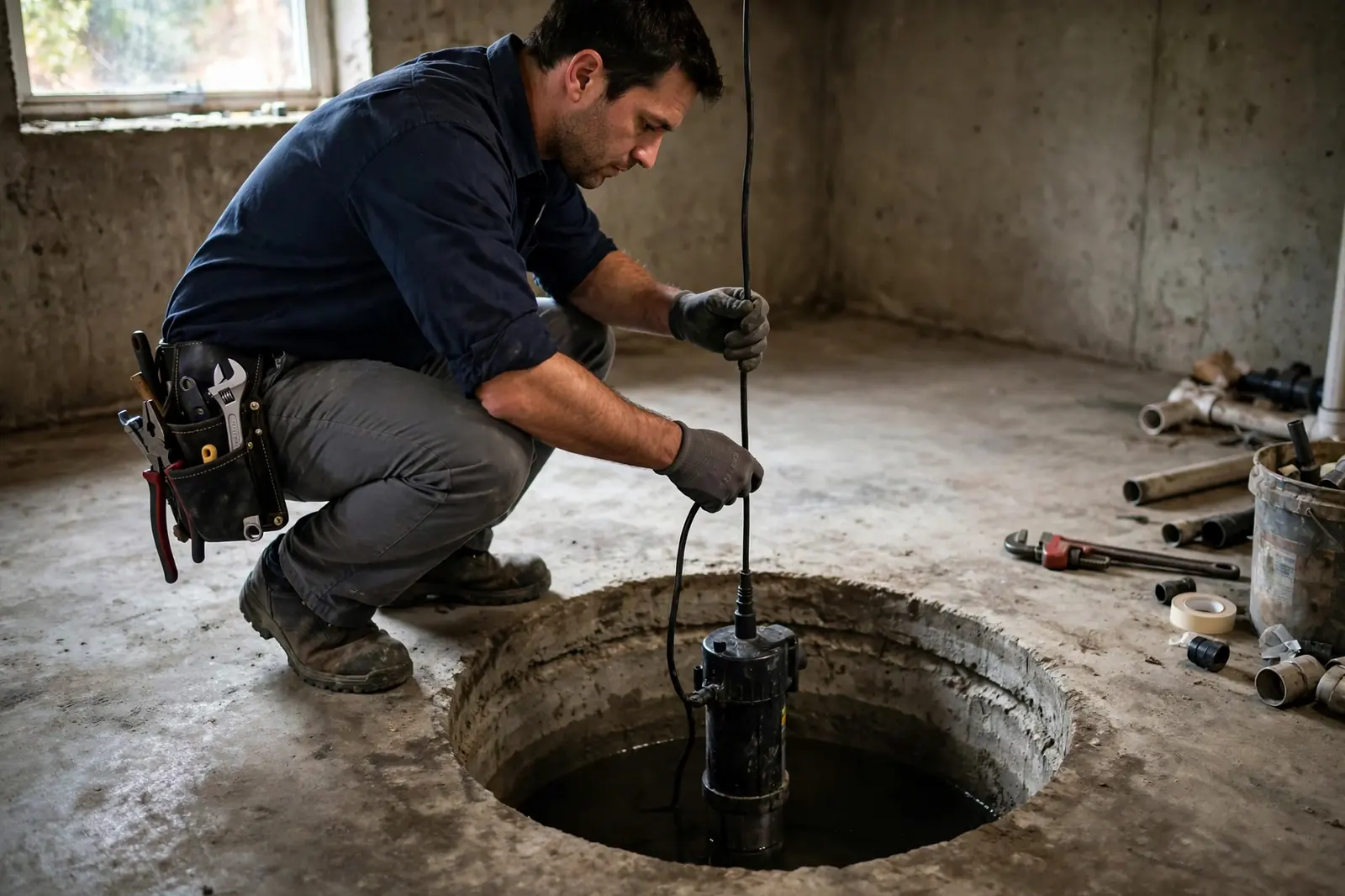
At a glance
What is sump pump installation, and what does it include?
Sump pump installation is the fitting of a pump in a pit at the lowest point of a basement or crawl space, so groundwater that collects in the pit is pumped out through a discharge line before it can flood the floor. It includes the pit, the pump, a check valve and the discharge route, not just the pump itself.
A complete install sets or enlarges the sump pit, seats the pump level, connects the discharge pipe with a check valve that stops water flowing back, and routes the discharge away from the foundation where local rules allow. The pump float is then tested by filling the pit with water, so you see the pump start, empty the pit and shut off cleanly.
Plumbing Lancaster PA is a connection service, not a plumbing company. We connect you with an independent local plumber who checks your basement layout, water entry points and discharge options before recommending a pump, and you agree the scope and price with that plumber directly. For other basement and household plumbing, see our general plumbing help in Lancaster, PA.
Why do Lancaster homes need sump pumps?
Lancaster homes need sump pumps because Lancaster County gets heavy rain events, many properties sit on a high water table, and groundwater rises around foundations after storms and snowmelt, entering basements through the pit, floor joints and foundation seams. A sump system collects that water at one low point and removes it under control.
The risk is not only a dramatic flood. Repeated shallow water damages flooring, drywall, stored belongings and appliances such as washers, heaters and water heaters that share the basement. It also leaves damp conditions behind after the visible water is gone. Homes that have taken water once, homes with a history of a wet basement corner, and homes where the water table rises seasonally are the strongest candidates.
Rain intensity matters as much as total rainfall. A short, heavy downpour can raise groundwater and surface runoff faster than soil can absorb it, which is why a basement that stays dry in steady rain can still take water in a storm. A correctly sized pump with a backup is designed for that peak, not for the average day.
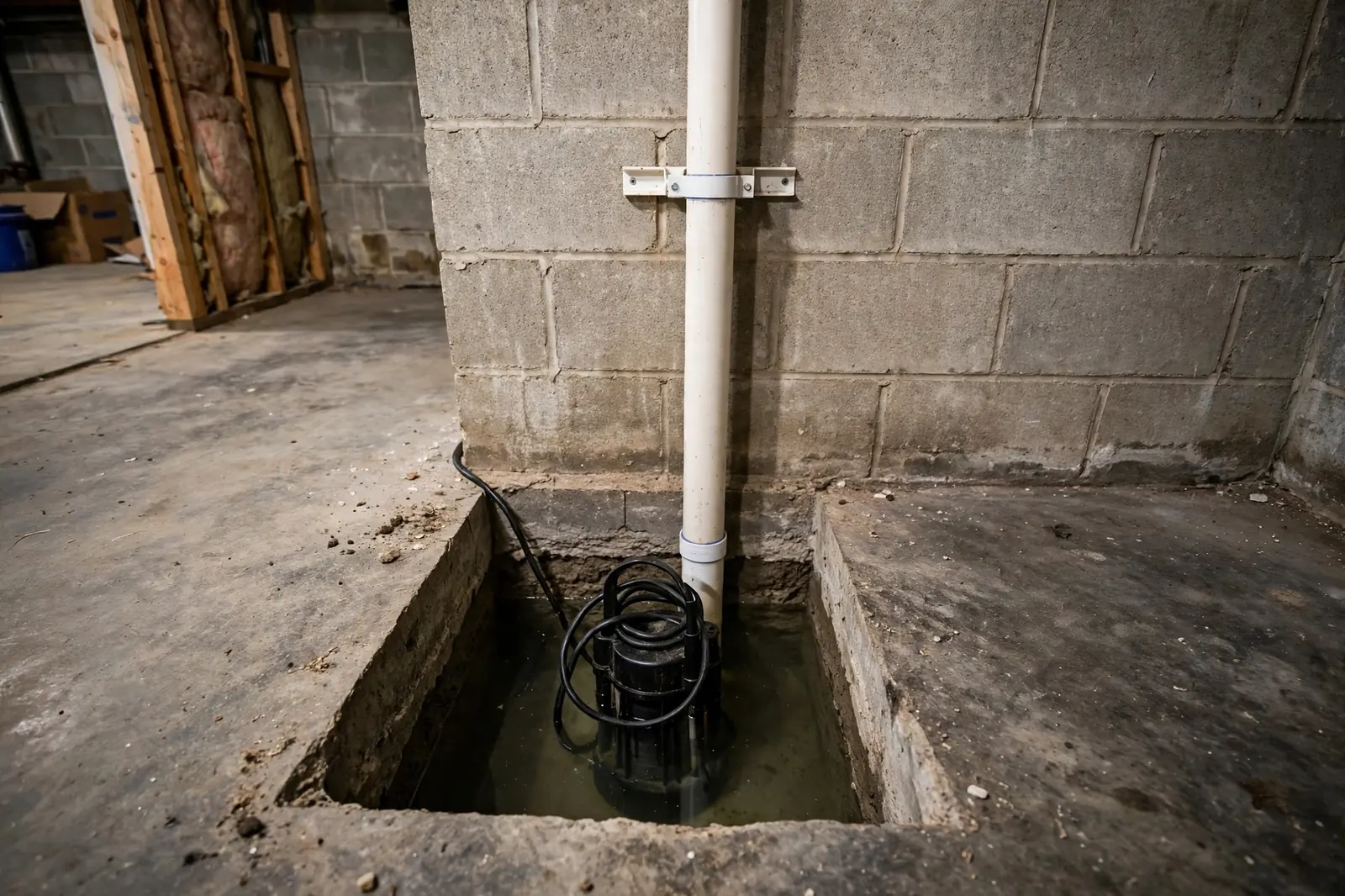
Should you choose a pedestal or a submersible sump pump?
Choose a submersible pump for a quieter, sealed install that sits inside the pit under a cover, and a pedestal pump where the pit is narrow or shallow and the motor needs to sit above the pit on the basement floor. Both move water the same way. The pit, the noise and the service access decide between them.
Submersible pumps
The motor sits in the water inside the pit, sealed against it. These pumps are quieter, allow a covered pit that reduces odors and keeps debris out, and suit finished basements. They are checked by lifting the cover and testing the float.
Pedestal pumps
The motor sits above the pit on a column, with only the intake in the water. The motor stays dry and is easy to reach for service, which can suit narrow pits that cannot take a submersible unit. They are louder and leave the pit more open.
Either way, capacity must match the pit and the inflow rate seen in a storm. A pump that is too small will run continuously and still lose ground, while the float type and pit size must work together so the pump cycles on and off cleanly rather than in short bursts.
What backup options protect your basement when the power goes out?
A battery backup sump pump is the main protection during a power outage, because storms that bring the heaviest rain are also the storms most likely to cut power, exactly when the primary pump is needed most. A backup system has its own pump, battery and charger, and takes over automatically.
A battery backup also covers other failures. If the primary pump motor fails, its float sticks or the discharge is blocked, the backup pump can respond to rising water in the pit and many systems sound an alarm, so you learn about the problem while the backup is still holding the line. Battery condition is part of the system, so the battery and charger should be checked as routine maintenance, not forgotten after install.
Some homes also consider a water powered backup where municipal water pressure and local rules make it suitable. That option needs a site check and is not available on well systems. Whichever backup you choose, size it for real storm inflow, not just for a trickle. If flooding is already happening, ask for emergency plumber help in Lancaster, PA rather than waiting for a planned install.
How are the sump pit, check valve and discharge line handled?
The pit must be sized to the pump and the inflow so the float can cycle properly, the check valve must be fitted on the discharge to stop pumped water flowing back into the pit, and the discharge line must carry water away from the foundation without freezing or blocking. These three details decide whether a good pump actually protects the basement.
Pit sizing
A pit that is too small makes the pump short cycle, switching on and off rapidly and wearing out early. A correctly sized pit lets the pump run in longer, less frequent cycles and gives a backup pump room to sit and operate in the same pit where planned.
Check valve
Without a working check valve, the water left in the discharge pipe drains back into the pit after every cycle, so the pump re pumps the same water. A noisy valve or water hammer at shutoff is a sign the valve should be checked.
Discharge route
The line should rise from the pump, exit the home and direct water away from the foundation, with the route checked for freeze risk in winter and for blockages at the outlet. Testing with water in the pit at the end of the install proves the whole path, not just the pump.
When does sump pump replacement beat repair?
Replacement beats repair when the motor is burned out or noisy and struggling, the pump runs but moves little water, the float fails repeatedly, the housing is cracked or corroded, or the pump cannot keep up with storm inflow. A pump that fails during a storm is not a small fault, so reliability is the deciding factor.
Some faults are worth repairing. A stuck float, a clogged intake, a failed check valve or a tripped circuit can all stop a sound pump, and each can be corrected. But a pump that is at the end of its working life, has overheated, or has a history of failing under load should not be trusted as the only line of defense for a finished basement.
Age plus symptoms is the practical test. If the pump is older, louder than it used to be, cycling oddly or showing rust and deterioration, replacing it on your schedule, ideally with a battery backup added, is safer than waiting for the next major Lancaster storm to test it. The connected plumber can test the existing pump, check the pit and valve, and tell you honestly whether a repair restores real reliability or only delays replacement.
What affects the cost of sump pump installation in Lancaster, PA?
Sump pump installation cost is affected by whether a pit already exists, the type and capacity of the pump, whether a battery backup is included, the length and route of the discharge line, and any electrical work needed for a dedicated outlet. We do not list install prices here, because basements and existing setups vary widely.
Pit work
using a sound existing pit differs from cutting and fitting a new pit in a concrete floor.
Pump type
pedestal and submersible pumps, and their capacity, are different units with different fitting needs.
Backup system
adding a battery backup pump, battery and charger increases the scope but protects against outages.
Discharge route
a short exit differs from a longer route that must avoid freezing and carry water well away.
Check valve and fittings
new valves and pipework are part of a correct install, not extras to skip.
Access and electrical
crawl space access and the need for a new outlet near the pit can add work.
You agree the scope and price with the independent plumber before work starts. To understand the connection steps, read how the connection runs before you call.
How does Plumbing Lancaster PA work?
Plumbing Lancaster PA works in 3 steps: call, describe, connect. We are a connection service, not a plumbing company, so the plumber who arrives is a local independent tradesperson, not our employee.
Call one number
Dial (607) 305-8020 any time. The line covers Lancaster city and the whole county service area.
Tell us the problem
Say what is leaking, clogged or cold, and which town you are in. Urgent jobs get flagged urgent.
Get connected locally
We connect you with a local plumber who takes the job. You agree scope and price with the plumber directly.
Need this done in Lancaster, PA?
Call (607) 305-8020 and tell us the problem and your town. We connect you with an independent local plumber who takes the job, and you agree the scope and price with the plumber before any work starts.
Call (607) 305-8020Sump pump installation questions, answered
Do I need a sump pump if my basement has only flooded once?
One flood shows that water can reach and enter the basement under the right conditions, and those conditions tend to repeat in heavy Lancaster County rain. A pump is worth discussing after a single event, especially if the basement is finished or holds appliances and stored belongings you cannot easily move.
What size sump pit do I need?
The pit must suit the pump, its float and the inflow rate, and allow the pump to run in longer cycles rather than short bursts. If a backup pump will share the pit, that needs room too. The plumber will measure the existing pit or specify a new one as part of the install scope.
Why do I need a check valve on a sump pump?
The check valve stops water left in the discharge pipe from flowing back into the pit when the pump stops. Without it, the pump re pumps the same water on every cycle, runs more often and wears sooner. A valve that slams or leaks should be replaced.
Will a battery backup pump run during a long outage?
Runtime depends on the battery condition and capacity and on how much water is entering the pit. A backup is designed to carry a home through an outage during a storm, not indefinitely. Keeping the battery charged and tested, and reducing other water entry, both extend how long it can hold.
How often should a sump pump be tested?
Test it ahead of the wettest seasons and after any long dry spell by pouring water into the pit and watching the pump start, discharge and shut off. Check the float movement, the check valve and the discharge outlet at the same time, and test the backup system and its alarm too.
How does Plumbing Lancaster PA work for sump pumps?
We are a connection service, not a plumbing company. Call (607) 305-8020, describe your basement, any flooding history and whether a pit already exists, and we connect you with an independent local plumber. You agree the scope and price directly with that plumber before work starts.
Wet basement in Lancaster? Get a sump pump fitted
Call (607) 305-8020, describe your basement and flooding history, and we will connect you with an independent local plumber for sump pump installation.