Home › Plumber Lancaster PA › Leak Detection
Leak Detection in Lancaster, PA
Leak detection is the process of locating hidden water leaks inside walls, floors and underground lines using listening equipment, moisture meters and cameras, so the repair opens only the spot that needs fixing. Call (607) 305-8020 and we connect you with an independent local plumber in Lancaster, PA who finds leaks this way. Plumbing Lancaster PA is a connection service, not a plumbing company.

At a glance
What is leak detection, and when do you need it?
Leak detection is a diagnostic visit that pinpoints where water is escaping from a pipe, fitting or fixture you cannot see. You need it when water is going somewhere it should not, but the source is not obvious: a stain grows on a ceiling, a floor feels warm or spongy, or the water meter keeps moving when every tap is off. Guessing at the source usually means opening the wrong wall first.
A detection visit answers three questions before any repair starts. Where exactly is the water escaping? What pipe or fitting has failed? And what is the smallest opening that gives access for the fix? Once those are answered, the repair itself is usually straightforward. If you are not sure whether your problem is a leak at all, start with our overview of plumbing services in Lancaster, PA and describe what you are seeing when you call.
What are the signs of a hidden leak in your home?
The most reliable signs are a water bill that jumps without a change in use, a meter dial that moves with all fixtures off, and damp or staining that keeps coming back. Hidden leaks rarely announce themselves with a drip you can hear. They show up as side effects, often weeks after the pipe started failing.
One sign on its own can have another cause. Two or three together almost always mean water is escaping somewhere, and the sooner the spot is found, the smaller the damaged area stays.
How do plumbers find a leak without tearing the walls apart?
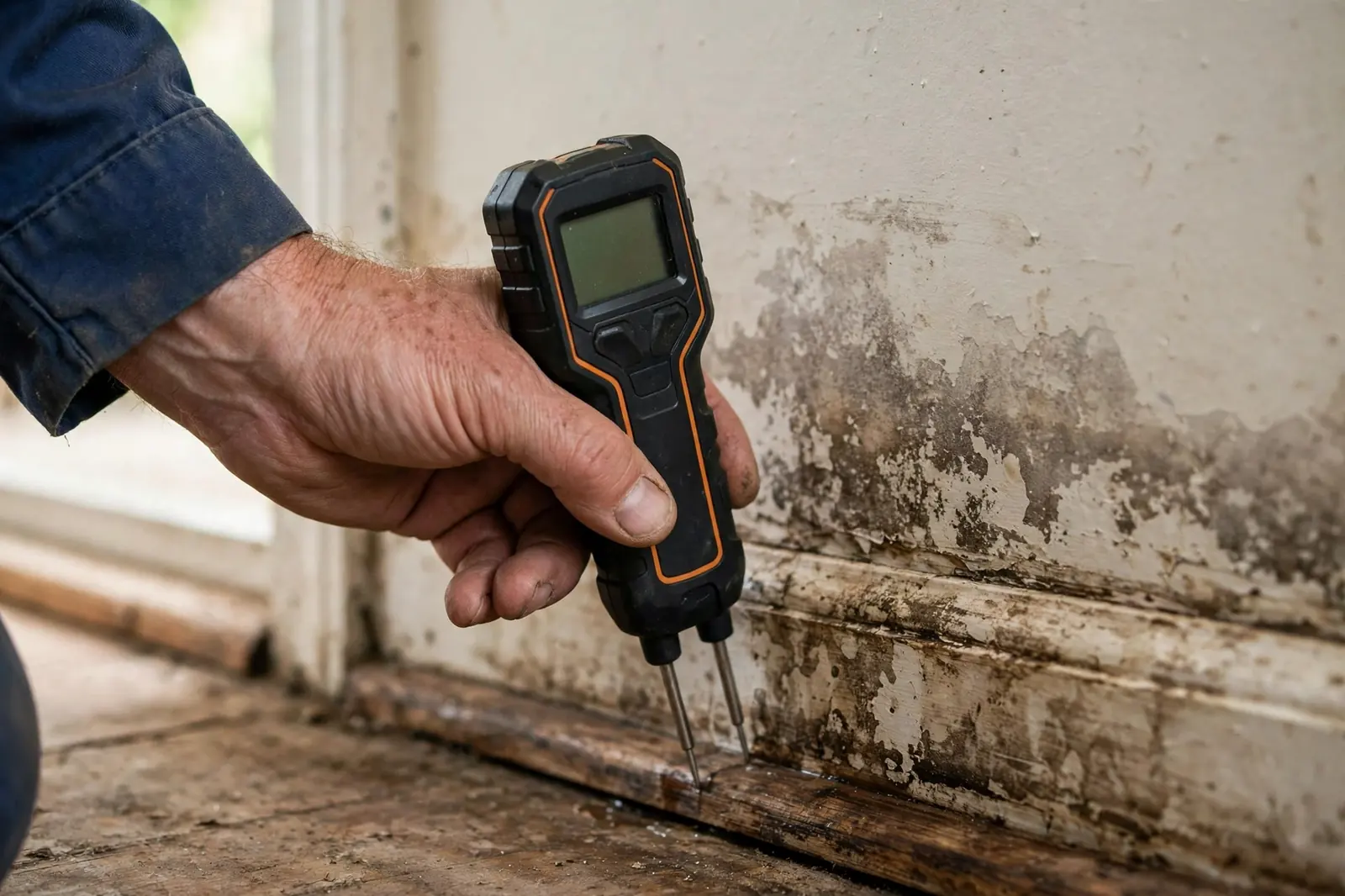
Plumbers find hidden leaks by listening for them, measuring moisture and looking inside the pipe, then confirming the spot before anything is opened.
The methods combine: sound points to the area, moisture readings confirm it, and only then is a small, planned opening made for the repair.
What can a camera inspection show that listening cannot?
A sewer camera inspection shows the inside condition of a drain or sewer pipe directly, including cracks, offset joints, corrosion and blockages that sound alone cannot describe.
Acoustic listening
Acoustic tools work best on pressurized supply lines, because the escaping water makes noise. Drain lines are not under the same pressure, so a slow drain leak can be nearly silent while it soaks the soil or subfloor around it.
Camera inspection
On camera, the plumber can see whether the problem is a single failed joint or a longer run of pipe that is deteriorating, and that difference decides between a spot repair and a larger job. The camera also records how far into the line the damage sits, measured from the access point, so the repair crew digs or opens in the right place the first time.
If your symptoms are slow drains and backups rather than clean water loss, the connected plumber may pair the visit with drain clearance in Lancaster, PA once the leak itself is located.
Where do hidden leaks hide in Lancaster homes?
In Lancaster homes, hidden leaks most often hide inside plaster walls, under first floors and in the supply lines of older rowhomes. Many city rowhomes and older houses in Lititz, Ephrata and Columbia still carry pipe runs that were never designed to be reached easily. Supply lines sit inside thick plaster and lath walls, so a slow pinhole leak can soak the wall cavity for a long time before a stain shows on the surface.
Common hiding places include the wall behind a tub or shower valve, the ceiling below an upstairs bathroom, the slab or crawl space under a kitchen, and the line running from the street into the house. In homes with aging galvanized or corroded pipe throughout, one leak can be a symptom of a wider problem, and the plumber may discuss repiping in Lancaster, PA as the longer term answer rather than a series of spot repairs.
What happens after the leak is found?
After the leak is located, the plumber explains the repair options and the access needed, and you agree the scope and price directly with the plumber before work starts. A spot repair cuts out the failed section of pipe and fits a new section. A failed valve or fitting is replaced. A drain leak found on camera might be repaired at the joint, or a short run of pipe might be renewed if the camera showed wider deterioration.
The opening made for access is kept as small as the repair allows, and the plumber will tell you plainly if plaster, tile or flooring repair will be needed afterward, since that finish work is usually handled separately from the plumbing repair. To see how the connection itself works from your first call to the visit, read how the connection itself works before you dial.
What affects the cost of leak detection?
The cost of a leak detection visit depends on where the leak is suspected, how many methods are needed to confirm it, and how hard the pipe is to reach. No honest price exists before the plumber knows what they are looking for, so be cautious with anyone who quotes a firm figure for finding and fixing a leak they have not located yet.
Location
a leak under a slab or behind a tiled shower wall takes longer to confirm than one in an exposed basement run
Methods needed
listening only, listening plus moisture mapping, or a camera run into a drain line
Access points
whether a cleanout or shutoff is reachable, or one has to be created
What the repair turns out to be
a single fitting, a pipe section, or a longer run
Timing
urgent, out of hours visits are handled differently from booked daytime work
You agree the price of the detection visit and any repair directly with the independent plumber, before the work starts.
How does Plumbing Lancaster PA work?
Plumbing Lancaster PA works in 3 steps: call, describe, connect. We are a connection service, not a plumbing company, so the plumber who arrives is a local independent tradesperson, not our employee.
Call one number
Dial (607) 305-8020 any time. The line covers Lancaster city and the whole county service area.
Tell us the problem
Say what is leaking, clogged or cold, and which town you are in. Urgent jobs get flagged urgent.
Get connected locally
We connect you with a local plumber who takes the job. You agree scope and price with the plumber directly.
Need this done in Lancaster, PA?
Call (607) 305-8020 and tell us the problem and your town. We connect you with an independent local plumber who takes the job, and you agree the scope and price with the plumber before any work starts.
Call (607) 305-8020Leak detection questions, answered
How long does a leak detection visit take?
Most visits take between one and a few hours, depending on how many areas need checking and whether a camera run is needed. A leak that shows clear acoustic signals is confirmed faster than a slow drain leak under a floor. The plumber will tell you what they have found and what they recommend before any repair begins.
Will the plumber have to open my walls?
Only at the repair stage, and only at the spot the detection work identified. Listening equipment, moisture meters and cameras exist specifically to avoid exploratory opening. When an opening is needed, it is planned around the confirmed location, which keeps the damaged plaster or tile to the smallest practical area.
My water meter moves when nothing is running. What does that mean?
A moving meter with every fixture off usually means water is escaping somewhere between the meter and your taps, or a toilet is passing water silently. Note whether the movement is constant or intermittent, and tell the plumber when you call. That detail helps them decide which test to run first.
Can leak detection find a leak under a concrete slab?
Yes. Acoustic equipment is designed for exactly this, because supply lines under a slab are under pressure and the escaping water can be heard through the concrete. Warm floor spots and moisture readings support the location. Once pinpointed, the repair opening is made at that spot rather than across the room.
Is a leak in a wall an emergency?
It can become one. If water is actively spreading, shut off the supply at the main valve or the fixture valve and call (607) 305-8020. A slow, contained damp patch is less urgent but should still be booked promptly, because hidden leaks keep damaging plaster, timber and flooring for as long as they run.
What should I do before the plumber arrives?
Turn off the water if the leak is active, move belongings away from the damp area, and avoid running the fixtures on the affected line. If you can, note when you first saw the stain or heard the sound, and whether your bill changed. Those details shorten the search.
Water going somewhere it should not in Lancaster?
Call (607) 305-8020 and describe the signs. We connect you with an independent local plumber who can locate the leak and agree the repair with you directly.